The Hungering Veil
Filed under: Salt Hollows Flora | Emotion-Leeching Plants | Semi-Sentient Growths
Contributor: FDG Field Archivist No. 5
Last updated: May 2025
Overview
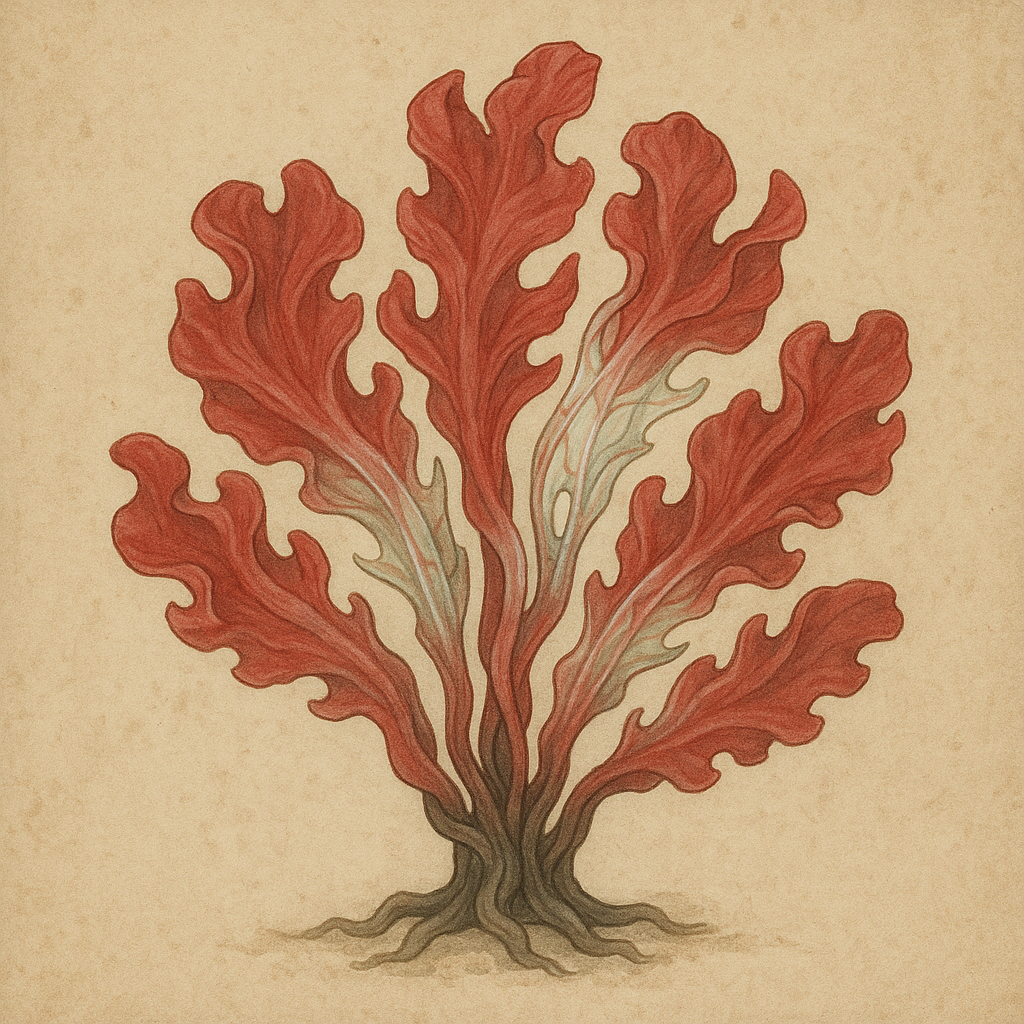
Fleshkelp is a semi-sentient marine plant species native to the trench-borders and coral graveyards of the Salt Hollows. Unlike terrestrial kelp, it is pulsatile, almost vascular in appearance—its fronds beat faintly with what seems to be a slowed heartbeat.
Fleshkelp does not photosynthesise. It feeds on emotional residue—grief, longing, nostalgia, and fear. It is especially responsive to grief tied to physical loss: amputations, vanished lovers, children lost at sea.
More parasite than plant, it is a tender predator, wrapping itself around you softly while it drowns your joy.
Appearance
- Length: Up to 6 feet, typically 2–3 feet in water
- Colour: Translucent red-brown to murky violet; black veins pulse visibly when feeding
- Texture: Slick and rubbery with faint striations resembling stretch marks or scars
- Frond Ends: Taper to rounded tips that “taste” water currents
- Movement: Gently undulates in silence, even when no current is present
- Light Reaction: Dims and curls inward in strong light; unfurls in gloom or grief-rich waters
Behaviour and Abilities
Emotional Leeching
- Responds to swimmers by brushing gently along exposed skin, feeding on:
- Unprocessed grief
- Deep longing
- Sudden heartbreak
- Victims experience:
- Sudden emotional catharsis
- A sense of quietness that may feel peaceful or terrifying
- A temporary inability to recall why they were upset
Tactile Hallucination Induction
- Contact with mature fronds may trigger phantom touches:
- The hug of a deceased loved one
- The brush of a lost child’s hand
- The grip of a forgotten enemy
- These illusions may be comforting or traumatic depending on emotional history
Feeding Clusters
- Grows in mats across graveyards, trench rims, and sunken vessels where death was lingering, not sudden.
- Often found with Silt-Sworn resting among it—suggesting symbiosis or shared memory-hunger.
Folklore and Signs
The Widow’s Weeds
Sailors claim the fronds of Fleshkelp resemble mourning veils. In some coastal ghost stories, women seen weeping into the sea are pulled under by the kelp, which wraps them gently until they stop struggling—and forget what they mourned.
Kelpbeds of the Unremembered
Thorne records speak of a kelpfield near a sunken fae abbey where operatives experienced collective memory loss. When recovered, all had cried without knowing why. One kept repeating the phrase, “I think I let go of him.”
Offerings of Ash
Some trench-folk burn relics of the dead above known Fleshkelp zones, claiming it sweetens the kelp’s feeding and reduces hallucinations. The practice is condemned by the Institute due to memory leakage.
Effect on Earth and Human Minds
Mild Exposure
- Temporary calm, emotional release
- Vivid dreams of the lost or longed-for
- Euphoria followed by emotional emptiness
Prolonged Exposure
- Memory erosion tied to grief events
- Emotional numbing or “grieflessness”
- In extreme cases: complete inability to recall lost loved ones, as if they never existed
- Some operatives compare the effect to a “surgical excision of sorrow”
Summary for Field Operatives
| Trait | Detail |
|---|---|
| Threat Level | Passive. Moderate to high psychological threat in vulnerable subjects. |
| Signs of Presence | Black-veined kelp pulsing gently. Calm zones with inexplicable peace. |
| Containment Risk | Low. Cannot survive in bright light or warm water. Fronds decay rapidly outside trench. |
| Engagement Advice | Avoid all direct skin contact. Operatives processing recent grief should not be deployed near known kelpfields. If hallucinations occur, re-anchor memory through written logs and verified external prompts. Avoid harvesting fronds for research—severed pieces may continue feeding for days. |
“It felt like I’d forgiven her. And then like I’d never known her.
I remember the funeral, the flowers, her face. But I can’t remember her laugh.
What did she laugh like?
Why does it feel like the kelp took that from me?”
—Excerpt from Field Report 112-A, Operative M. Delane, Coral Gate Trench Site

 Faylinn Defence Group