The Bargainers of Sorrow
Filed under: Salt Hollows Fauna | Emotion-Feeding Fae | Psychic Parasites
Contributor: FDG Field Archivist No. 5
Last updated: May 2025
Overview
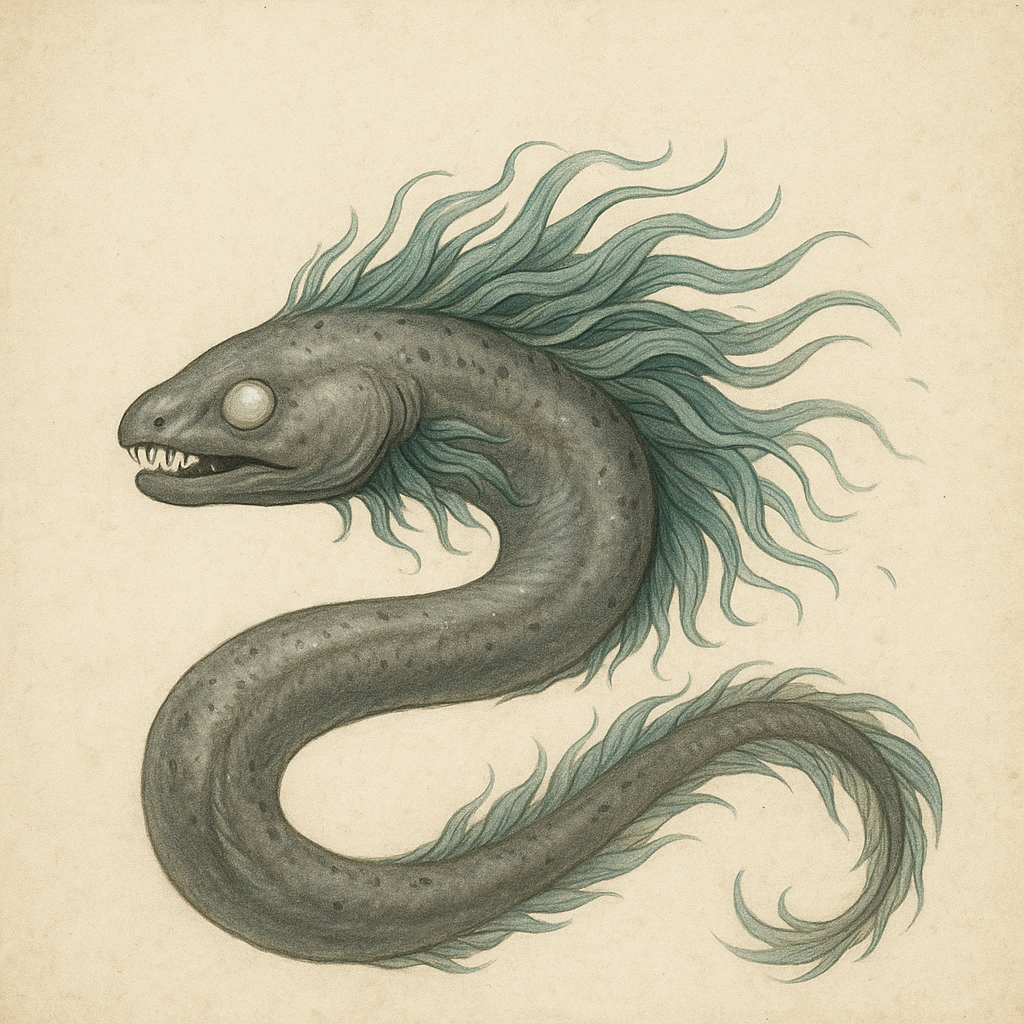
Grief Eels are sleek, intelligent, and unnervingly perceptive entities native to the saltwater cenotaphs and funerary depths of the Salt Hollows. These eels are not purely animal—classified as lesser emotion-feeding fae, they engage in direct barter with mortals, offering emotional relief in exchange for a single, potent memory.
They do not take indiscriminately.
They ask.
And those who agree often forget what they’ve given up—until something else in them starts to rot.
Appearance
- Length: 3 to 6 feet
- Colour: Translucent grey-black with internal bioluminescence resembling flickering candlelight
- Skin: Smooth, mucus-slick; trails warmth in water despite low temperature
- Eyes: Large, mournful, almost human; shift colour based on proximity to emotional trauma
- Mouth: Small, delicate—used not to bite, but to touch skin during a bargain
- Movement: Hypnotic, slow undulations; seem to hover rather than swim when feeding
Behaviour and Abilities
Memory-for-Relief Bargaining
- The Grief Eel offers a one-time bargain to mortals in sorrow: release from grief in exchange for a single, emotionally charged memory.
- The eel selects the memory based on what it deems “ripest”—often:
- The moment of death of a loved one
- A first heartbreak
- A failure that defines the self
- Once the memory is taken, the pain vanishes—and so does any knowledge the event ever occurred.
Most victims report feeling “peaceful but hollow.”
Empathic Targeting
- Grief Eels can sense emotional distress from great distances and will follow ships, divers, or beach-goers who carry intense grief.
- They do not attack or stalk in the traditional sense. They linger, making their presence known through dreams or whispered invitations.
Touch-Triggered Imprint
- When touched (skin to skin), the eel may accidentally trigger a memory cascade in the victim—bringing forgotten grief into sudden, painful clarity.
- Eels used by certain trench-faiths to “reopen the wound” before sacred rites.
Folklore and Signs
“The Weeping Thread”
Old sea superstition warns against following faint trails of warm water in cold seas—this is believed to be the Grief Eel’s wake. Children are taught: “Where it’s warm, something remembers you crying.”
The Sleeper’s Bargain
In some coastal ghost stories, widows hear a soft voice in their dreams offering to take away the pain “for just one little thing.” When they awaken, they are happy—but cannot remember who they lost.
Saint Wiven’s Eyes
Some trench-bound cathedrals feature twin carved eyes above salt altars—said to be modelled on the Grief Eel’s own. Worshippers believe confessing pain before the eyes protects them from being approached unprepared.
Effect on Earth and Human Minds
Mild Exposure
- Heightened emotional awareness
- Dreams involving lost loved ones—often smiling and silent
- Strange warmth in bathwater or sea spray
- Feelings of being offered something too kind to be trusted
Prolonged Exposure
- Memory erosion: key emotional events vanish without explanation
- Emotional flattening; victims report feeling “clean” or “emptied out”
- Delayed grief syndromes: memory returns as illness, rage, or uncontrollable weeping
- Risk of overexposure—bargaining away too many memories may lead to core personality collapse or identity drift
Summary for Field Operatives
| Trait | Detail |
|---|---|
| Threat Level | Non-violent. High risk to emotional and cognitive stability. |
| Signs of Presence | Trails of warm water. Flickering candlelight underwater. Whispers in the voices of the dead. |
| Containment Risk | Moderate. Individuals may continue to make bargains even after removal from site. Eels do not confine easily. |
| Engagement Advice | Never speak aloud your most painful memory near Salt Hollow waters. Avoid direct eye contact or skin contact underwater. If a bargain is offered, do not respond. Operatives exposed to eel-temptation should undergo post-mission memory anchoring. Written records of key life events are strongly recommended. If you cannot remember who you came to save—abort the mission. |
“I haven’t cried since I met it. Not when my brother died. Not when I saw the face in the mirror and didn’t know who it was.
I’m not sure if I’ve been sad. I’m not sure if I was ever allowed to be.”
—Case Note, FDG Journal Entry 202, Operative R. Thorne, Hailpoint Wreck Site

 Faylinn Defence Group