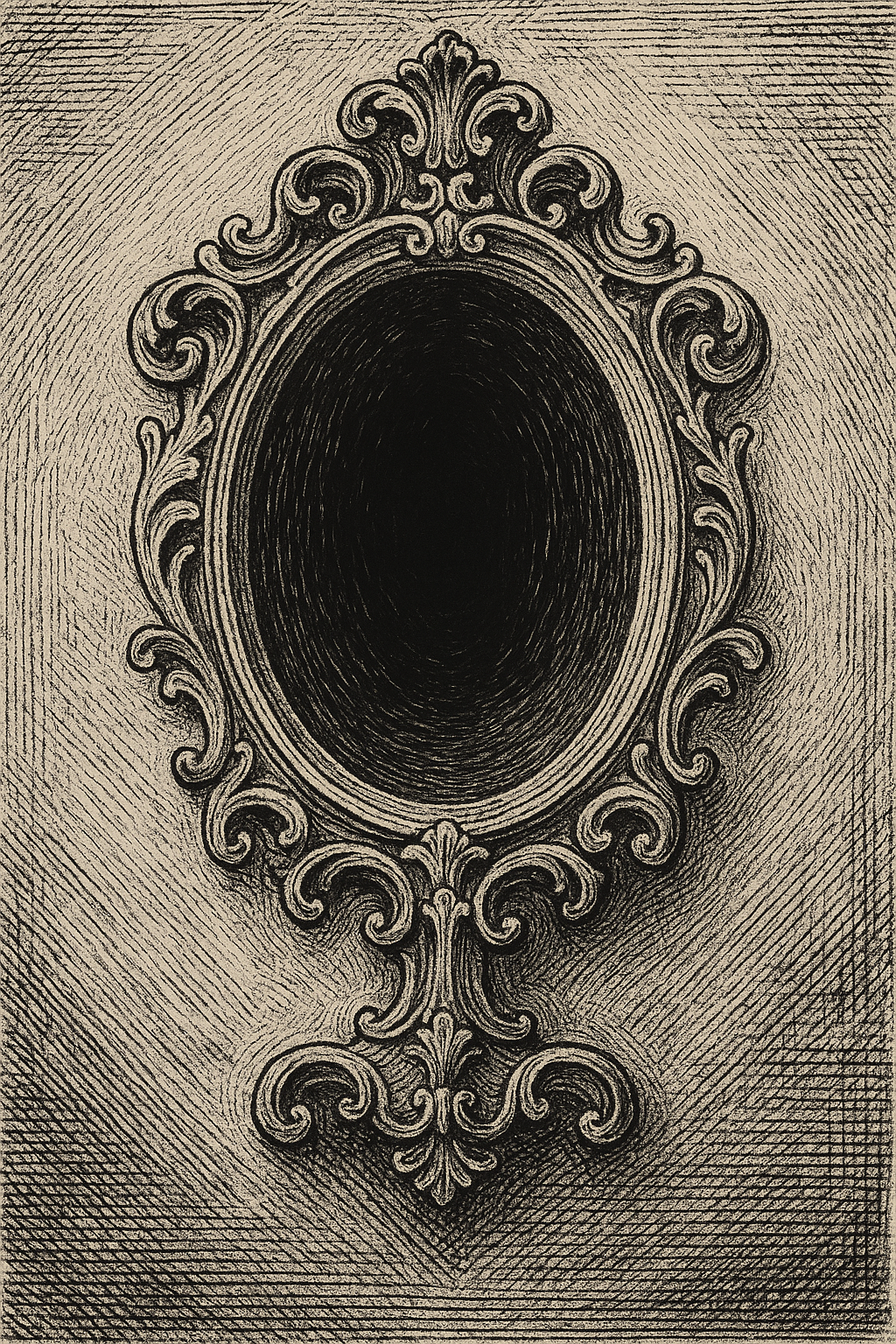
Description:
A hand-held mirror framed in alabaster veined with gold, exquisitely carved but cold to the touch. The reflective surface does not show the present but instead reveals fragmented memories and alternate futures—visions that flicker and shift, often unsettling the viewer. Prolonged gazing is said to hollow the observer’s shadow and emotional warmth, leaving them eerily still and detached.
Recovery Notes:
Recovered from a sealed chamber beneath the Pale Court’s central palace, believed to have been a personal artifact of Queen Elidore the Hollow. The chamber was discovered during a controlled excavation of ancient fae ruins. Initial handling triggered a temporary paralysis among researchers until protective wards were applied.
Function and Believed Use:
Thought to be used for divination, memory examination, or as a tool to bind or extract emotional essences. The mirror’s hollowing effect may serve as a method of control or punishment, stripping the observer of their vitality and shadow—symbols of life and emotion in the Pale Country.
Known Incidents:
Incident 17B: An operative who looked into the mirror for too long reported feelings of dissociation, loss of personal identity, and inability to express emotion. Recovery took several weeks with specialized mental rehabilitation.
Incident 23F: The mirror was stolen briefly from containment, leading to three unexplained disappearances of guards stationed near the artifact. It was returned under unknown circumstances.
Containment Protocol:
Stored in a lead-lined, shadowless containment box with protective wards to prevent prolonged viewing.
Handling permitted only with protective visors that filter the mirror’s reflections to prevent hollowing.
No direct eye contact allowed during transport.
Immediate psychological evaluation mandatory for anyone exposed beyond safe viewing limits.
 Faylinn Defence Group