The Petal That Waits
Filed under: Mirecourt Flora | Funerary Plants | Reflective Distortions
Contributor: FDG Field Botanist No. 9
Last updated: May 2025
Overview
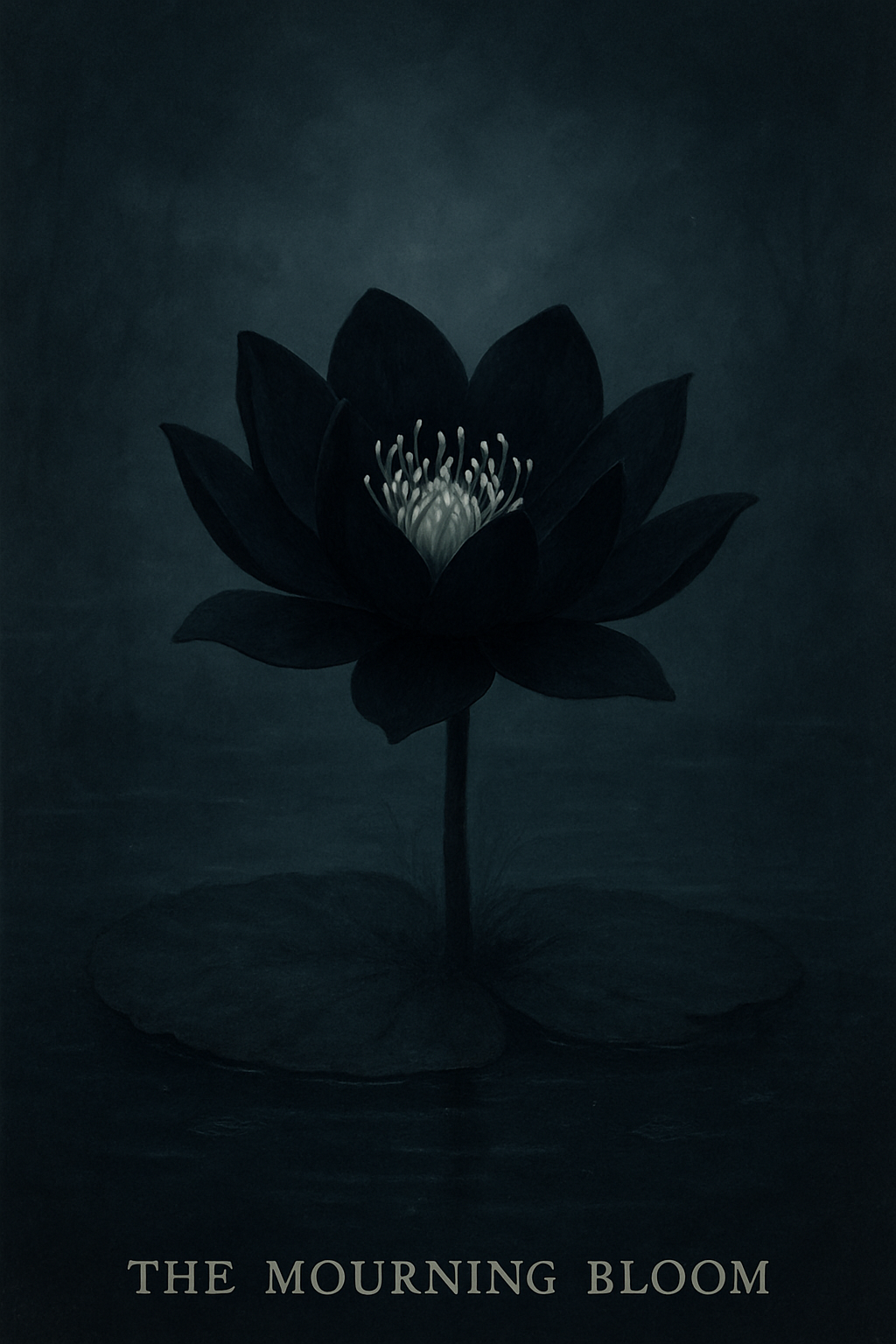
No plant in the Mirecourt carries more quiet reverence—or fear—than the Mourning Bloom. This rare, black-petaled lily grows only in shallow graves, abandoned baptismal pools, or stagnant waters where names have been spoken in grief.
It is not a plant of beauty, though it is beautiful.
It is not a plant of death, though it is never far from the dead.
Pluck it, and you vanish—from mirrors, from voices, from yourself.
Appearance
- Flower: Deep, inky black petals with a matte finish, arranged in wide, heavy layers. At the centre: stamens of ghost-pale white, almost glowing when touched by breath.
- Leaves: Broad, slate-coloured lily pads with subtle veins shaped like script or runes—some say the plant records final words.
- Scent: Faint and sour-sweet. Reminiscent of unopened letters and decaying rosewater.
- Water: Always found in still, dark pools or earth sunken slightly by time or memory. Never grows in moving water. Frequently associated with sites of unmarked burials.
Fae Realm Use
In Mirecourt, the Mourning Bloom is cultivated—or more accurately, coaxed—to grow in specific ritual places. Its known functions include:
- Drawing insects, whispers, and emotional residue toward a corpse
- Used during fae funeral rites to help bind or release a soul
- Placed upon the chest of the dead so they may “speak their final silence”
- Gathered in threes by emissaries performing mirror-severing rites, allowing travel unseen by those who remember them
Only those with permission from Lady Wyr or binding grief may touch the petals without effect.
Effect on Earth
Those who pluck or disturb a Mourning Bloom experience one of two effects:
- Ghost-Vision:
- The plucker will see a ghost they are emotionally connected to—a deceased parent, a lost child, a former self.
- The ghost does not speak unless directly addressed.
- It fades when the flower is discarded or rots, often with a whispered sound of water draining.
- Becoming Ghost:
- The plucker becomes invisible in mirrors and photographs until the next dawn.
- Their footsteps leave no sound.
- Their voice is muffled or unheard by loved ones, even in the same room.
- Some report that animals stare as if recognising a spirit.
In both cases, emotional disturbances are common:
- dream-walking
- sobbing without memory of why
- brief convulsions during sleep resembling drowning
Folklore and Warnings
- The Grief Lily:
It is said if a woman plucks a Mourning Bloom and carries it to bed, she will dream of the child she never had—and awaken to find wet footprints near her cradle. - No Reflection Rule:
In households near Mirecourt, mirrors are covered during storms lest the Mourning Bloom open and steal reflections of those grieving. - Return Offering:
One tale tells of a man who plucked the bloom to see his brother again. The ghost came—and asked to stay. The man never cast a shadow afterward.
Harvesting and Handling
Highly discouraged. Only licensed ritualists and approved FDG botanical agents may transport Mourning Blooms.
- Must be gathered with gloves of waxed linen
- Placed into mirror-lined jars
- Buried again within 24 hours or offered to the Mud-Queen
Cut blooms do not die—they wither until spoken to, then bloom again in the presence of grief.
Summary for Field Operatives
| Trait | Detail |
|---|---|
| Threat Level | Moderate to High. Not physically harmful but spiritually invasive. |
| Signs of Presence | Black lilies in still water, loss of reflection, cold wet footprints indoors |
| Containment Risk | High in populated areas. Touch triggers latent grief-ghosts. |
| Engagement Advice | Do not pluck. Do not speak to your reflection for 24 hours after contact. If visibility fades, light candles facing outward and write your name in salt before dawn.** |
Quote from Field Report #326:
“I picked it before I knew what it was. That night, I saw my wife at the window. She was smiling—kind, but wrong. When I looked in the mirror, I wasn’t there.
She whispered, ‘I’ve been waiting.’ I buried the flower in the morning. I still don’t know which of us returned.”
—Field Agent “R.”, Mirecourt Boundary

 Faylinn Defence Group