The Sorrow-Skinned Lures
Filed under: Mirecourt Fauna | Emotional Predators | Amphibious Mimics
Contributor: FDG Field Archivist No. 12
Last updated: May 2025
Overview
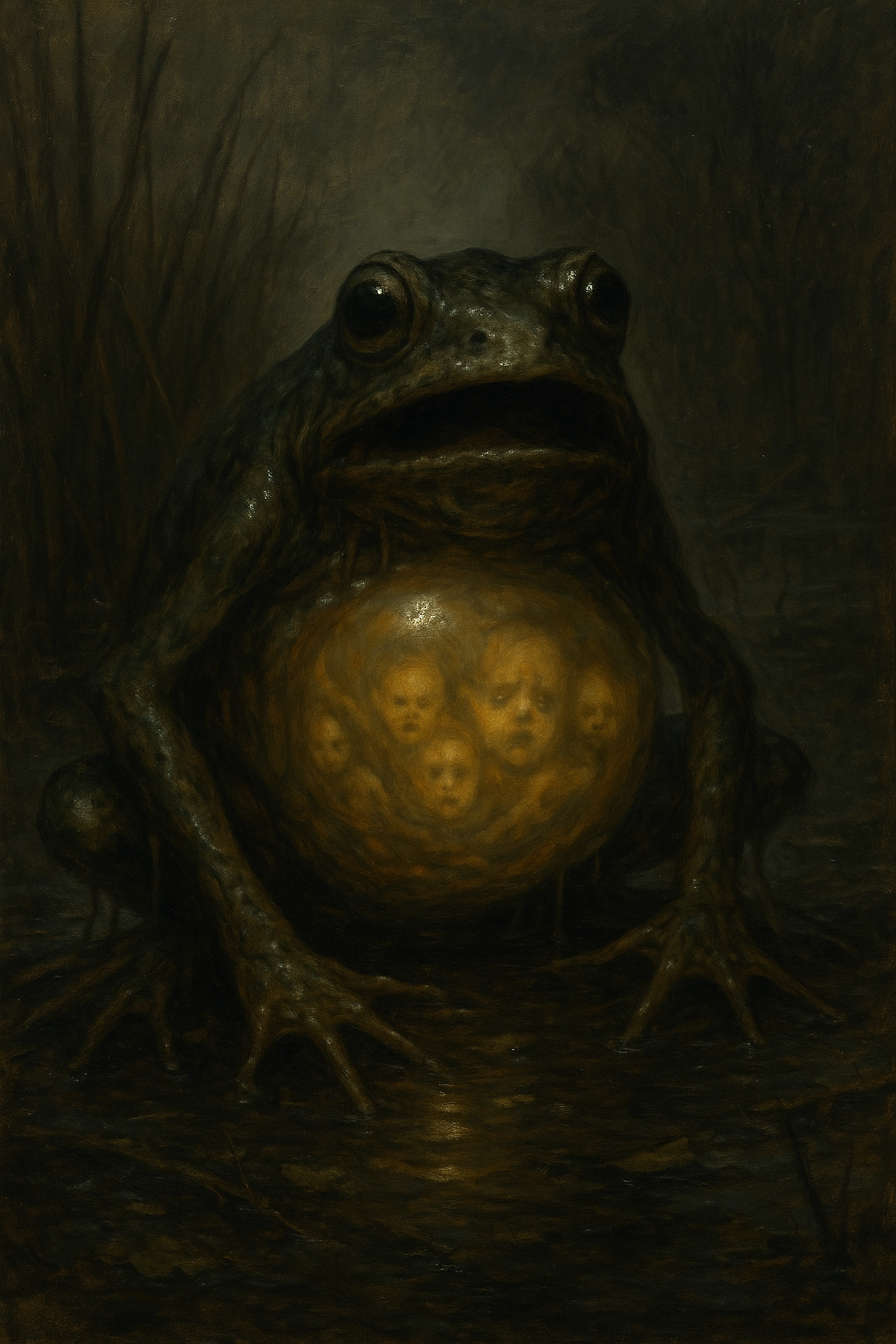
Half-creature, half-consequence, Boglatchers are among the most insidious forms of marshlife documented within the Mirecourt.
Though frog-like at first glance, they are not natural beings. They are emotion-harvesters, swamp-born mimics who lure the living into still water with cries that should not belong to frogs—and yet do.
Boglatchers do not kill by force. They feed on intent, grief, and the unbearable instinct to help.
Appearance
- Size: Varies between a large bullfrog and a small child crouched. Some reports note individuals growing as they feed, temporarily swelling to grotesque proportions.
- Skin: Slick, semi-translucent. Cold to the touch and slightly gelatinous.
- Belly: A sagging, fluid-filled sac that glows faintly in darkness.
- Inside, observers have reported:
- flickering lights like candleflame
- blurred faces, often crying or sleeping
- writhing shapes resembling curled-up infants or forgotten memories
- Inside, observers have reported:
- Eyes: Round and too-wide. Some say they blink sideways, others not at all.
They crouch near waterlines, half-buried in mud, silent until noticed—or needed.
Behaviour and Abilities
- Cry Mimicry:
Boglatchers lure victims with perfectly imitated baby cries, often muffled and distorted—as if coming from inside a wall or under water.
Cries are always at just the right distance to require movement deeper into danger. - Emotional Absorption:
Upon contact, the creature’s skin absorbs emotional residues from its target—most effectively:- guilt
- grief
- longing
- unspoken regret
Victims may not even realise they are losing anything—only that they feel strangely hollow afterward.
- Non-Lethal by Design:
Boglatchers rarely drown victims. Their purpose seems to be harvesting, not killing. However, prolonged exposure near them has led to:- disorientation
- dissociative episodes
- emotional numbness
- compulsive return to marshes at night
- Symbiosis with Other Mirecourt Entities:
Some Wyrmlings are known to cohabitate with Boglatchers, using them as decoys or message-bearers. Mistress Eelisk is also reported to tend to them in certain nesting areas.
Folklore and Signs
- The Cry Beneath the Ice:
In winter, Boglatchers are said to hibernate beneath frozen ponds. If a baby’s cry is heard beneath the ice, villagers are warned not to break the surface, no matter how convincing it sounds. - The Lantern Trap:
A rare behaviour: some Boglatchers rise from the mud and sway side-to-side like a hanging lantern, their belly-glow pulsing to the sound of their cries. This is used to lure in those following ghost-lights or search parties. - Cursed Kindness:
A superstition from marsh-bordering families warns: “If you hear a child cry but no one thanks you for finding them, you’ve touched a Boglatcher. Wash in grave-dirt or forget your own name.”
Many homes keep bowls of ash or iron shavings near their front doors—to “unmark” returning helpers.
Effect on Earth and Human Minds
- Victims of Boglatcher exposure may experience the following:
- Persistent melancholy
- Intrusive thoughts of imagined past mistakes
- Dreams of sinking
- Guilt without source
- Aversion to mirrors or silence
These effects typically fade over several days, unless reinforced by repeated exposure. In rare cases, long-term symptoms have led to insomnia, depression, or the belief that one’s real child has been replaced.
Summary for Field Operatives
| Trait | Detail |
|---|---|
| Threat Level | Low physical threat, high emotional danger. |
| Signs of Presence | Infant cries near water, belly-glow in dark reeds, muddy footprints ending nowhere |
| Containment Risk | Low. Fragile, often flees. But difficult to identify until too late. |
| Engagement Advice | Do not approach crying sounds without confirming source. Do not touch the creature. Cleanse affected operatives with running water and salt. Avoid eye contact with the belly if faces are visible. |
Quote from Field Report #214:
“I heard it from the reeds—crying like my niece did when she was teething. I ran without thinking. The mud pulled me halfway down before I saw the thing crouched there. It stopped crying and just… watched. I’ve felt cold behind my eyes ever since.”
—FDG Field Agent “Larsen”, Sevenpenny Marsh, 1995

 Faylinn Defence Group