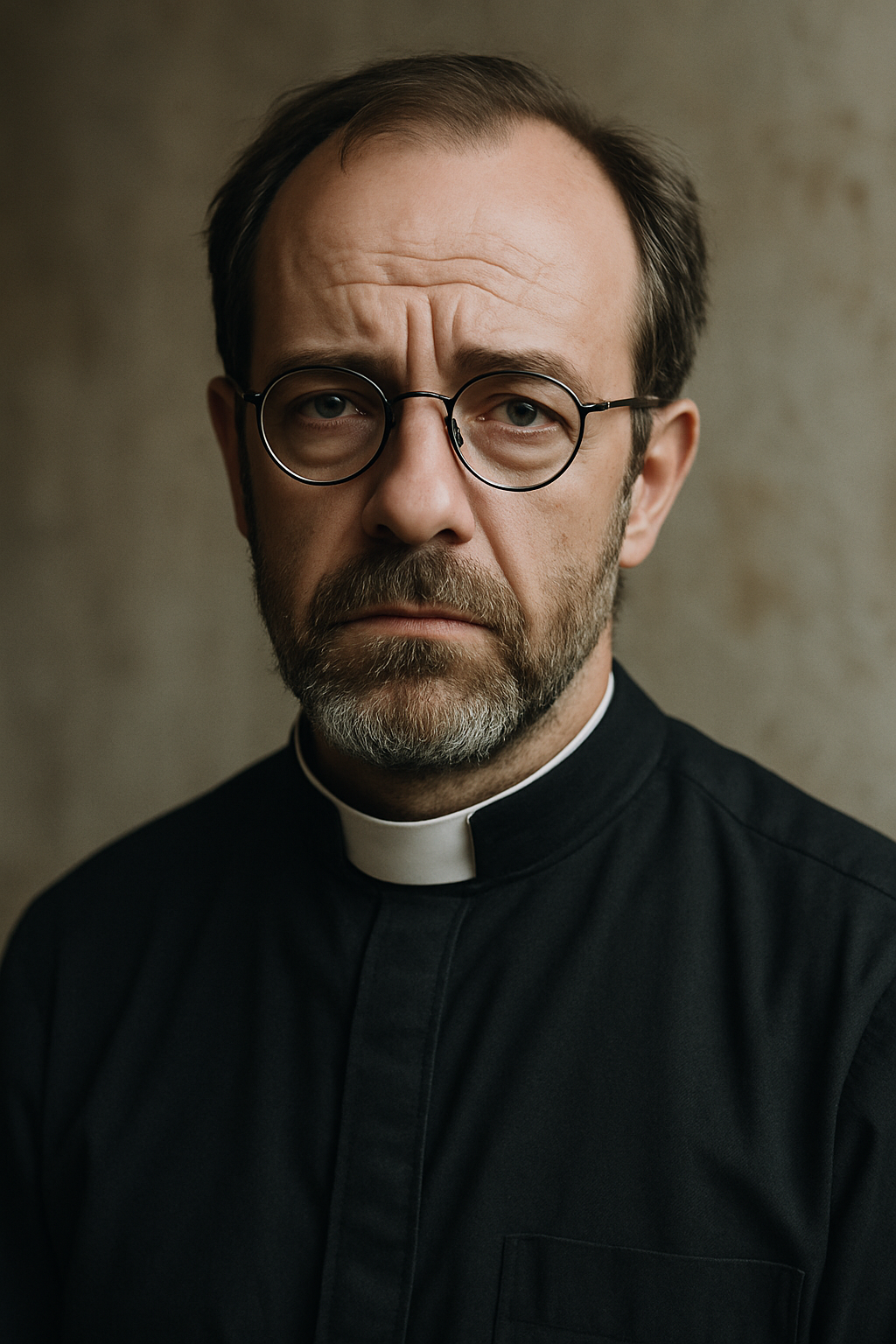
Role: Theological Advisor, Fae Ontology & Esoteric Frameworks Division
Background:
Reverend Peter Lowe began his career as an Anglican chaplain, serving rural parishes across the south of England. A quiet man of faith and reason, he offered comfort, performed rites, and tended to the ancient yew trees in his churchyard—until the summer of 1998, when he saw a glowing child step out from the trunk of one.
The vision shook him, but he filed it away as a test of faith, a metaphor, a mystery best left untouched.
Twenty years later, while consulting on a peculiar case for the FDG—an incident involving reversed sacraments and time-lost infants—he saw the child again. Unaged. Unchanged. Watching him from the shadows of another yew.
The Institute offered him a formal advisory role soon after.
Lowe now serves as the FDG’s primary theological consultant on entities, manifestations, and events that blur the line between folklore, divinity, and fae ontology. Though not a field operative, his presence is often requested during containment rituals and negotiations involving faith-based anomalies.
Skills:
- Deep expertise in Christian theology, apocrypha, and comparative esoteric systems
- Specialises in interpreting fae phenomena through religious and symbolic lenses
- Consults on ritual structure, sacramental distortion, and fae interactions with sacred ground
- Maintains a personal catalogue of cross-faith references to “glimmering children,” “living branches,” and “divine interruptions”
Often called upon to assess whether a phenomenon is best classified as fae, angelic, or something older than either.
Personality:
Measured, compassionate, and quietly haunted. Lowe carries his collar and doubt with equal gravity. He does not preach—but he listens deeply. He’s known for asking the right question at the wrong moment, and for lighting candles in FDG headquarters when no one is looking. Keeps a yew sprig in his breast pocket at all times.
Motive:
To discern the boundaries of belief and myth. Lowe does not seek to define the fae in theological terms—he seeks to understand why they sometimes appear in places of worship. And why they remember him.
 Faylinn Defence Group