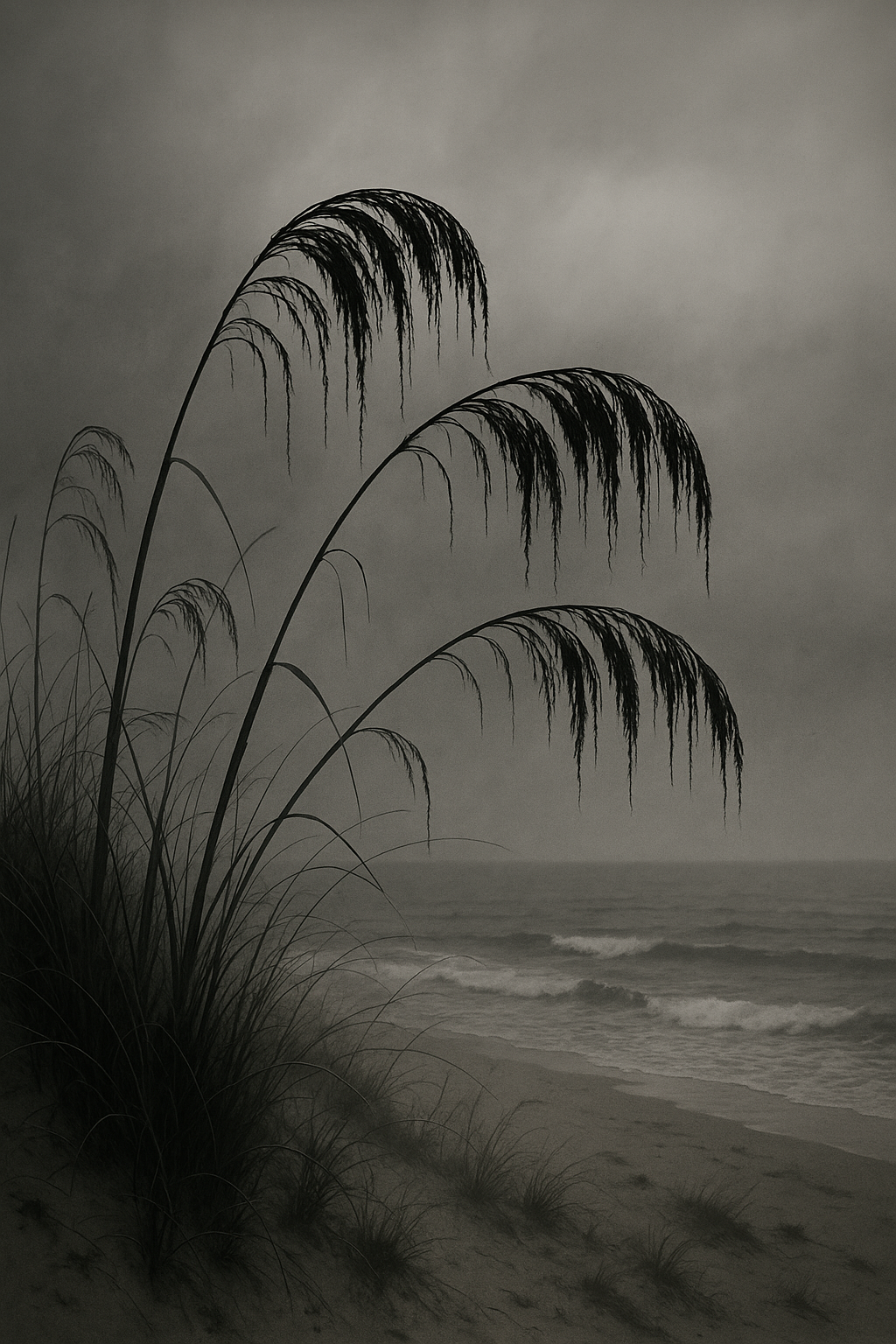
The Grass That Grieves With the Wind
Filed under: Salt Hollows Flora | Aeolian Plants | Sound-Active Coastal Flora
Contributor: FDG Field Archivist No. 5
Last updated: May 2025
Overview
Wailing Reedgrass is a pale, brittle coastal grass species found only on forgotten dunes bordering Salt Hollow-influenced coastlines. It grows in isolated patches, often where no other flora survives, and is most active under moonlight, fog, or grief-heavy winds.
When stirred by wind, it produces soft keening tones—often mistaken for weeping, distant lullabies, or whispered regret. Unlike normal grass, its sound is not due to shape alone—it is psychically reactive to unresolved emotion.
It does not feed on sunlight.
It feeds on what the wind remembers.
Appearance
- Height: 2–4 feet tall
- Colour: Ash-blonde with streaks of silver and dull grey
- Structure: Thin, hollow stalks with faint notches resembling slits or mouths
- Seed Heads: Absent; reproduction appears to be asexual and linked to emotional disturbance
- Location: Wind-scoured dunes, grave-sand beaches, sites of lost seaside settlements
Behaviour and Abilities
Aeolian Psychic Resonance
- When wind passes through a patch of Reedgrass, it produces:
- Sub-audible harmonics that trigger emotional memory
- Whispers in the voice of someone the listener has lost
- Distant sobbing, lullabies, or old prayers
- The grass “tunes” its sound to the emotional field of nearby individuals
Grief Amplification
- Listeners may suddenly:
- Recall buried sorrow
- Feel abandoned or unworthy without apparent cause
- Hear their own voice repeating apologies they never said aloud
- Emotional sensitivity increases dramatically while within earshot
Silent Field Effect
- In the absence of strong emotion, the grass does not sound
- Operatives report patches of Reedgrass being completely silent during emotionally neutral missions—only to begin weeping when someone steps into the field with unresolved pain
Folklore and Signs
The Sand That Cries Back
A folk belief holds that if you walk barefoot through Reedgrass at night, the wind will speak your name followed by someone else’s last words. Some beachgoers have fled after hearing “I forgive you” in voices they cannot place.
Widow’s Dune
A real location in East Kent is named for the Reedgrass that grew around a vanished lighthouse settlement. Locals refuse to picnic there, reporting voices in the wind that call for someone named “Mother,” or sing lullabies no one can translate.
The Silent Wedding
Fae tradition once required Reedgrass woven into the cloaks of grieving brides or widowers, so the grass would sing out anything left unsaid before vows were taken. Few such ceremonies ended in peace.
Effect on Earth and Human Minds
Mild Exposure
- Sudden emotional shifts (tearfulness, melancholy, or guilt)
- Hearing voices in the wind (usually tied to personal memory)
- Nostalgic flashbacks involving past farewells or failures
- Physical goosebumps even in warm air
Prolonged Exposure
- Hallucinatory recall of conversations that never occurred
- Hearing one’s own voice in the wind, confessing things never admitted
- Emotional entrapment (e.g., sitting in the grass for hours, unable to leave)
- In rare cases: sleepwalking back to the site for nights afterward, even from miles away
Summary for Field Operatives
| Trait | Detail |
|---|---|
| Threat Level | Passive. Low physical danger; moderate psychological hazard. |
| Signs of Presence | Patches of grass swaying in still air. Wind that sings or cries. Emotional destabilisation without cause. |
| Containment Risk | Low. Cannot grow away from grief-laden coasts. Removal results in silence; regrowth occurs after emotional events. |
| Engagement Advice | Do not enter alone. Wear auditory dampeners if emotionally vulnerable. Avoid speaking names of the dead while within the dune zone. Monitor mental state for lingering sorrow or inexplicable tears. If the grass begins to call your name—leave immediately. It knows what you haven’t said yet. |
“I sat in the grass and it hummed an old hymn I hadn’t heard since my sister’s funeral.
Then it sang the version she made up when we were kids—wrong words, her words.
No one else knew that version. I don’t know what’s buried there.
But it remembers her better than I do.”
—Field Report 332-D, Operative N. Bell, Softwhistle Dune Outpost

 Faylinn Defence Group