The Thorn That Knows What You Regret
Filed under: Salt Hollows Flora | Punishment Flora | Shame-Reactive Organisms
Contributor: FDG Field Archivist No. 5
Last updated: May 2025
Overview
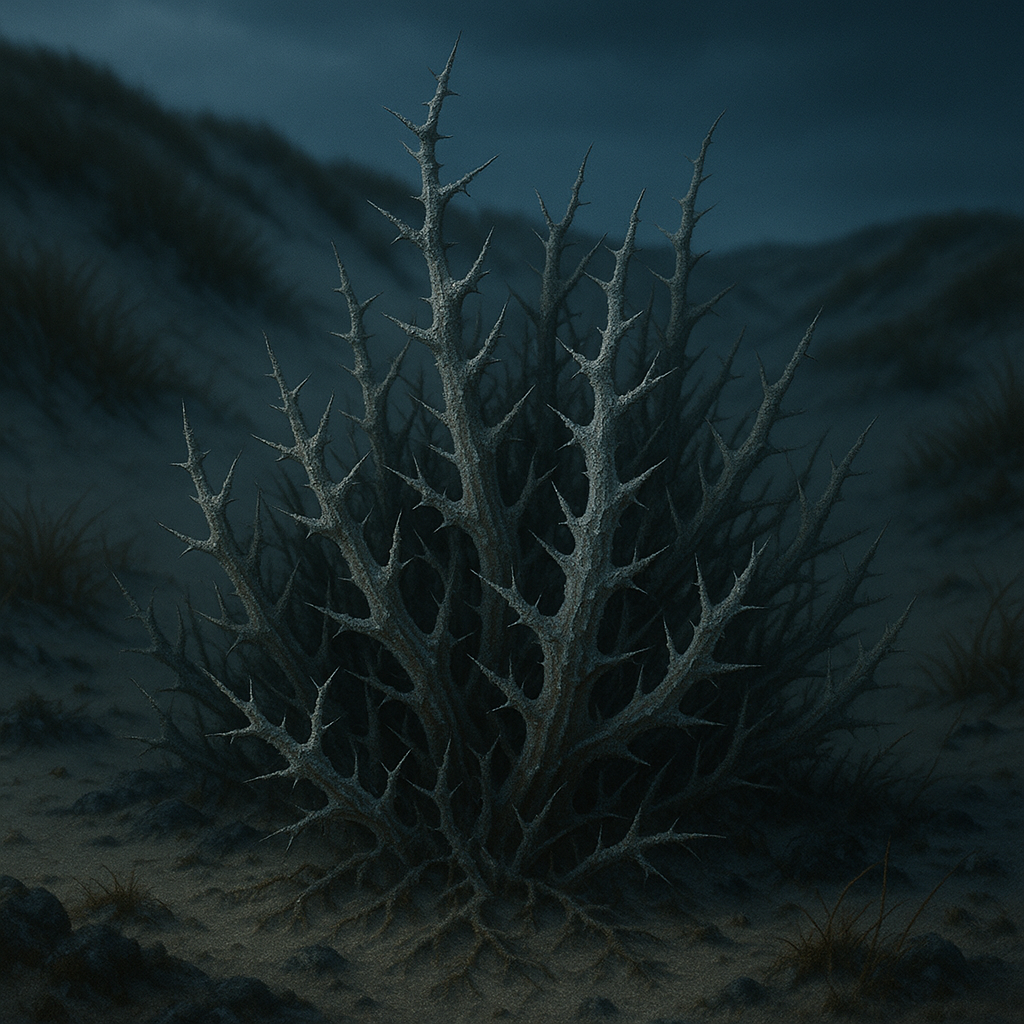
Ash-Salt Briar is a semi-sentient, bramble-like growth found on isolated islets, abandoned coastal sanctuaries, and occasionally sprouting along the backs of submerged fae titans. Its thorns are sharp, bone-white, and infused with crystallised remorse—a byproduct of the emotional sediment on which the briar feeds.
This plant reacts not to sunlight or water, but to shame.
When approached by someone bearing guilt, it stirs. When touched, it delivers not poison—but a vision of the first time you knew you were unworthy.
Some fae cultivate it deliberately. Others bury it in themselves like a penance.
Appearance
- Structure: Dense black-violet vines with thorn clusters every 2–3 inches
- Colour: Stems appear charred or soot-coated; thorns are bone-pale, faintly iridescent under moonlight
- Motion: Still unless approached by emotionally reactive beings—then subtly writhes or tightens
- Location Hotspots:
- Ruins of fae judgment circles
- Shipwrecked altars
- Abandoned ritual sites
- Fae penitentiary gardens
Behaviour and Abilities
Shame-Sensitive Thorn Reflex
- The thorns do not prick everyone.
- They move of their own accord to pierce the skin of those carrying:
- Buried guilt
- Self-loathing
- Shameful secrets
- Contact triggers a flashback—not of a memory forgotten, but of a core moment of emotional self-abandonment (e.g., betrayal, cowardice, cruelty).
Vision-Induced Paralysis
- Victims experiencing visions from Ash-Salt pricks often freeze mid-action.
- In severe cases, the subject:
- Drops to their knees
- Begins apologising aloud
- Cannot articulate what they’ve seen, but weeps uncontrollably
Symbolic Binding
- In some fae traditions, one may offer themselves to the briar to bind guilt—wrapping the vines around their limbs, neck, or chest.
- These “briar-bearers” are pitied and feared. The thorns do not kill, but they slowly hollow the voice.
Folklore and Signs
“The Thorn Remembers”
It is said the briar was first planted by a fae noble who executed his own brother. When his shame could not be cleansed, he buried his sword and planted the briar atop it. The blade is said to still grow from its roots, and anyone who lies near it will be shown the worst truth about themselves.
Ash Weddings
Some deep trench cults bind couples together with strands of Ash-Salt during shadow vows—meant to ensure no betrayal can occur without pain. Many such marriages end in silence or self-immolation.
The Silent Back
Recovered exiles from Salt Hollow penitentiaries often bear intricate scarring in briar patterns. When questioned, they say nothing—but some cry when asked if they deserved it.
Effect on Earth and Human Minds
Mild Exposure
- Tightness in chest when approaching
- Sudden intrusive thoughts of past failings
- Skin sensitivity, especially near old scars
- Reflexive whispering of names associated with guilt
Prolonged Exposure
- Vision loops—reliving the same failure each night
- Self-sabotaging behaviour
- Deepened depression or emotional numbness
- In some cases, victims begin growing thorns from scar tissue, believed to be symbolic rather than biological—but effects are persistent
Summary for Field Operatives
| Trait | Detail |
|---|---|
| Threat Level | No direct physical threat. Extremely high psychological risk to guilt-bearing individuals. |
| Signs of Presence | Bone-white thorns in black ash stems. Cold air even in warmth. Whispered apologies from no source. |
| Containment Risk | Moderate. Cut vines regrow in presence of unprocessed shame. Burned briars may sprout days later from the same soil. |
| Engagement Advice | Only operatives with cleared psychological profiles may approach briar zones. Do not speak of personal failures within 30 meters of active growth. Wear thorn-shield gloves and avoid skin contact. If pricked, do not resist the vision—name aloud what you regret. That may end the loop. |
“It showed me the thing I never admitted.
Not even to myself. Not even in dreams.
I wanted them to drown. I was glad when the boat sank. I cried, but I was glad.
And the briar didn’t punish me.
It just… let me see it. Over and over. Until I stopped pretending I wasn’t.”
—FDG Debrief Transcript, Operative C. Hartwell, Blackvine Crossing
 Faylinn Defence Group